
ADHD in Everyday Life: From Morning to Night
Eight illustrated moments. The everyday effort people may not see.
Missing the bus. Losing your place in a task. Forgetting a message. These moments can feel small on their own, but a recurring pattern can affect everyday life.
Read one card at a time. Each illustration has the same words in selectable text beside it. The extra panel explains why a single moment is different from an ongoing difficulty.
What is ADHD—and when does it matter?
What ADHD means
ADHD is a neurodevelopmental condition. It involves a persistent pattern of difficulties with attention and/or hyperactivity and impulsivity that affects daily functioning.
What can happen to anyone
Occasionally losing keys, putting off a task or interrupting someone can happen to anyone. One familiar example does not establish ADHD.
When to ask for assessment
Consider how often difficulties happen, how long they have been present, and their impact. Repeated problems at home and at work, school or in relationships are worth discussing.
What a clinician considers
An ADHD assessment considers symptoms beginning in childhood, whether they are unexpected for someone’s age, their impact across settings, and other possible explanations or coexisting conditions.
You do not need to recognise every example. People with ADHD have different experiences. These illustrations are not a symptom checklist, screening score or diagnosis.
From morning to night
Moment 1 of 8
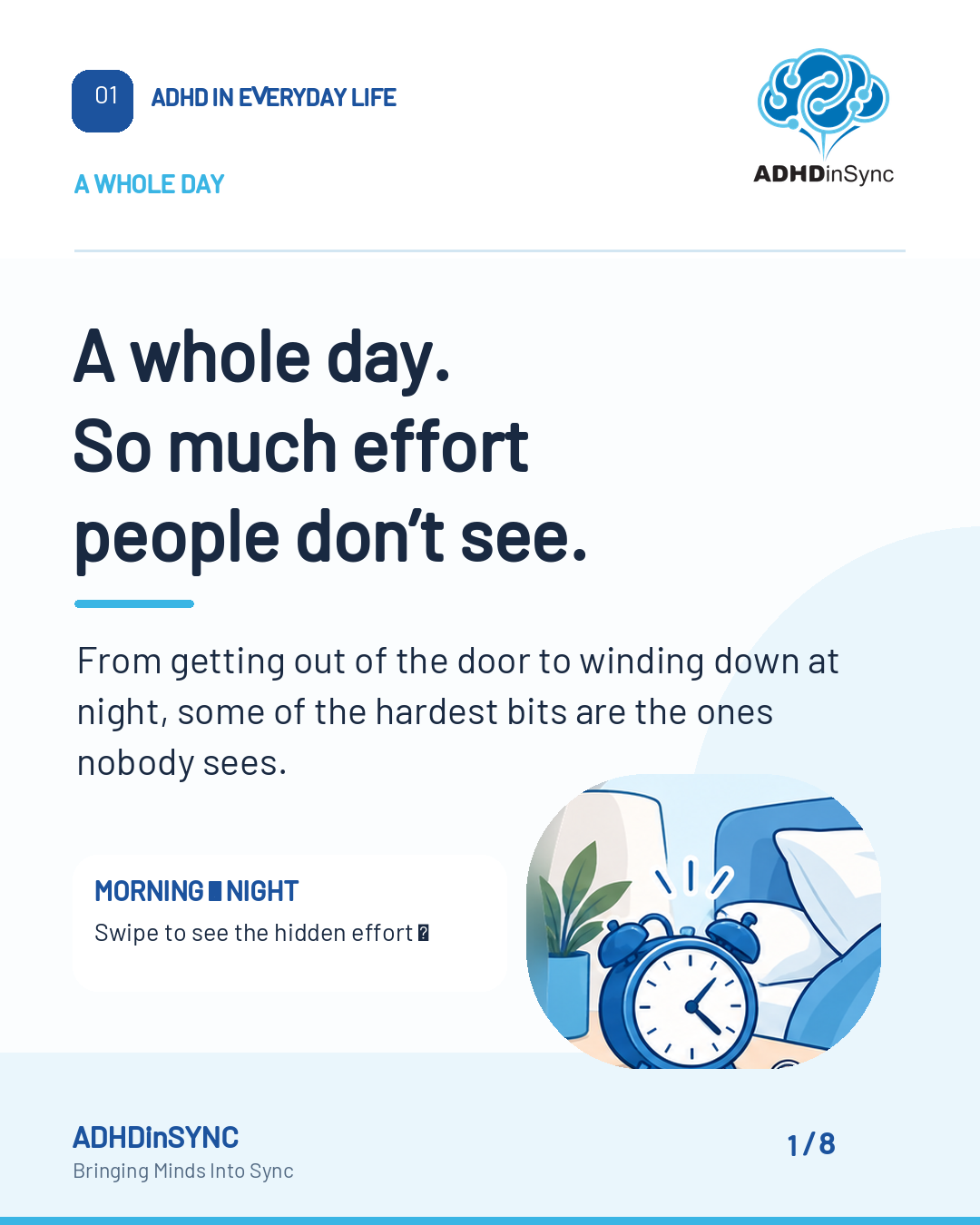
A whole day — effort people don’t always see
From getting out of the door to winding down at night, some of the hardest bits are the ones nobody sees.
Why the pattern matters
A busy day alone does not mean ADHD. Notice whether difficulties recur over time, in different parts of life, and what they cost you.
Moment 2 of 8
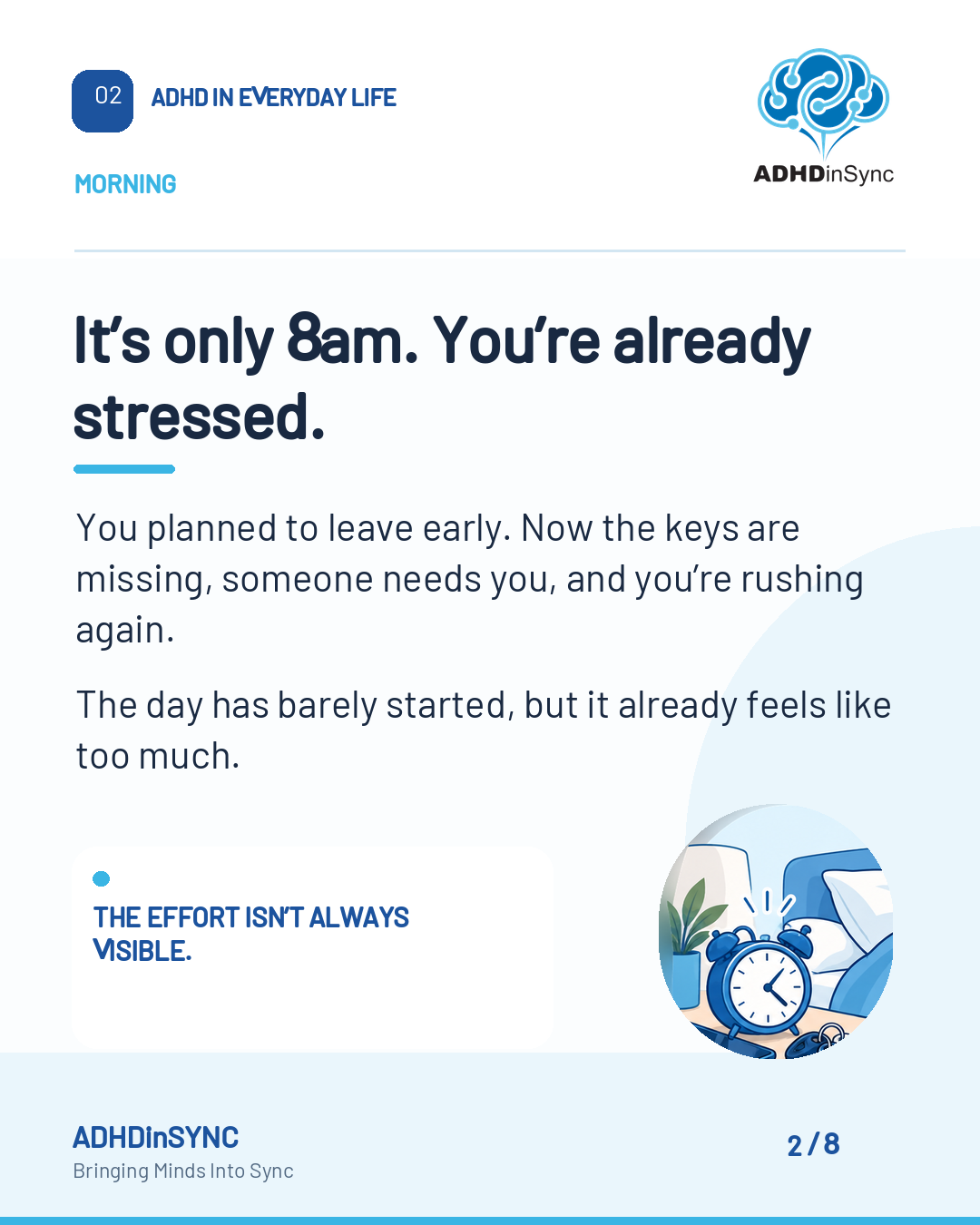
Morning — already rushing
You planned to leave early. Now the keys are missing, someone needs you, and you’re rushing again. The day has barely started, but it already feels like too much.
Why the pattern matters
Misplacing keys occasionally is common. Repeatedly missing transport, school or work because of disorganisation is worth discussing.
Moment 3 of 8
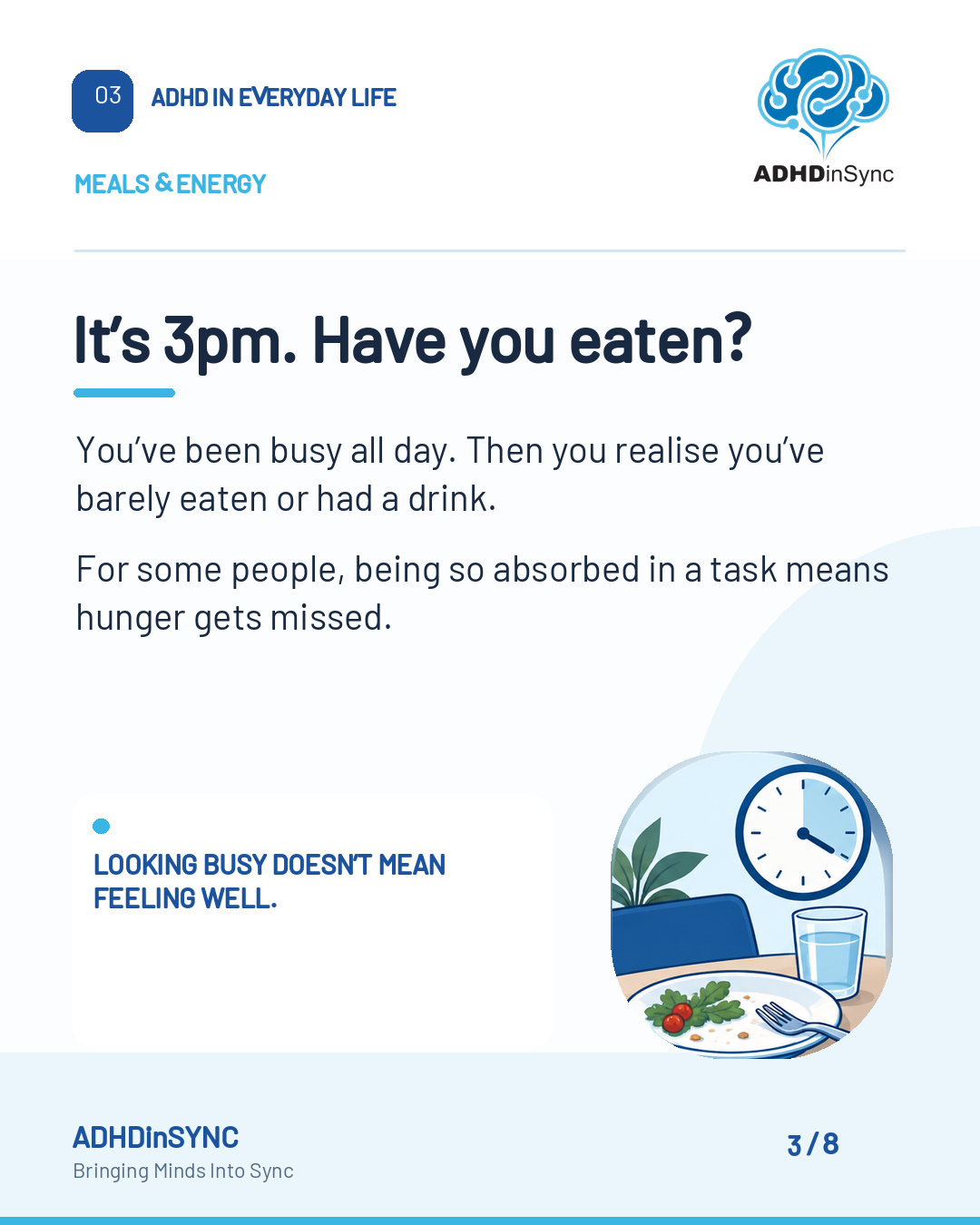
Meals and energy — it’s 3pm; have you eaten?
You’ve been busy all day. Then you realise you’ve barely eaten or had a drink. For some people, being so absorbed in a task means hunger gets missed.
Why the pattern matters
Regularly missing meals can affect wellbeing. Forgetting to eat is not specific to ADHD; ongoing eating difficulties deserve individual advice.
Moment 4 of 8
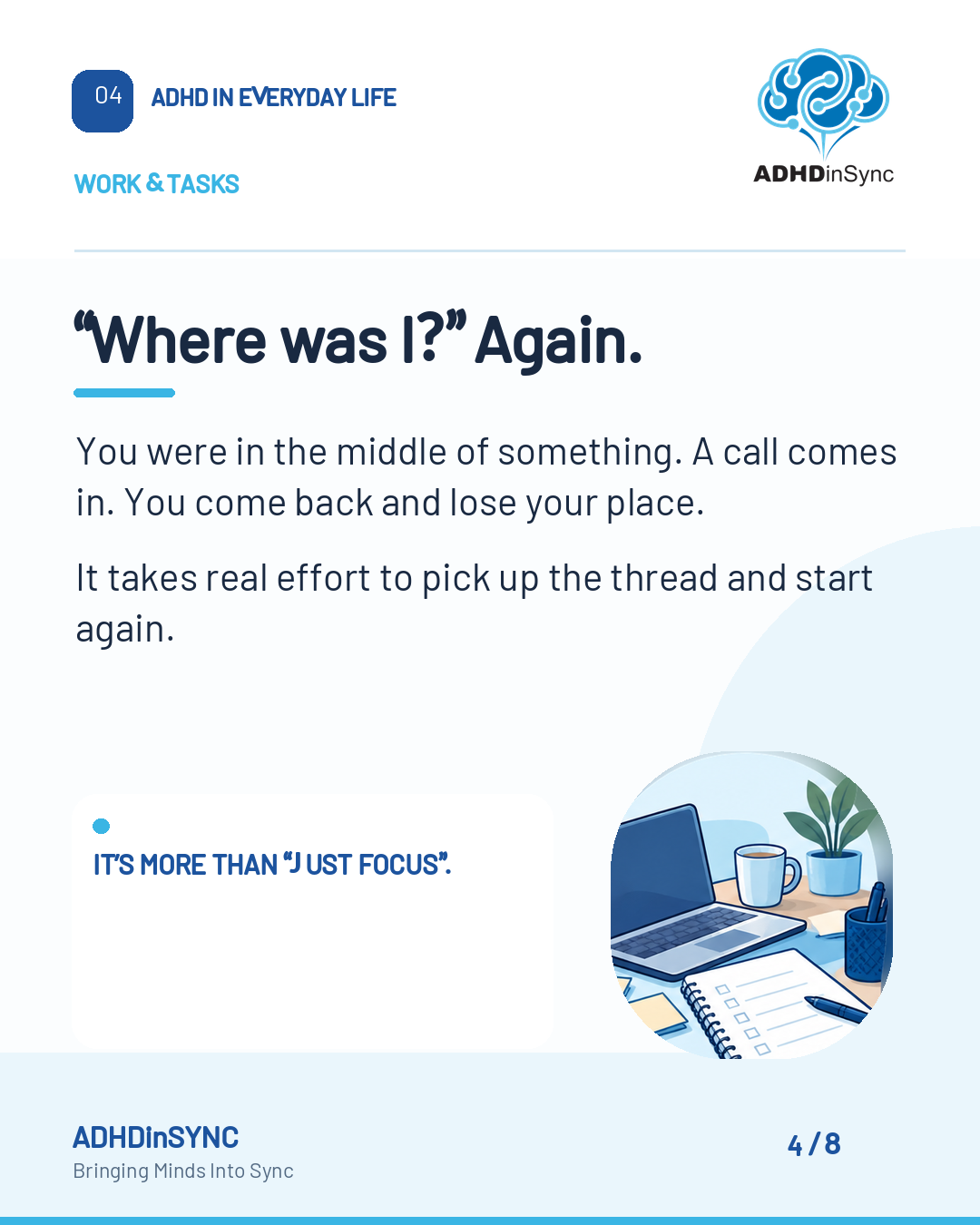
Work and tasks — “where was I?”
You were in the middle of something. A call comes in. You come back and lose your place. It takes real effort to pick up the thread and start again.
Why the pattern matters
Losing your place after an interruption happens to many people. Repeated unfinished tasks or missed deadlines show why the wider pattern matters.
Moment 5 of 8
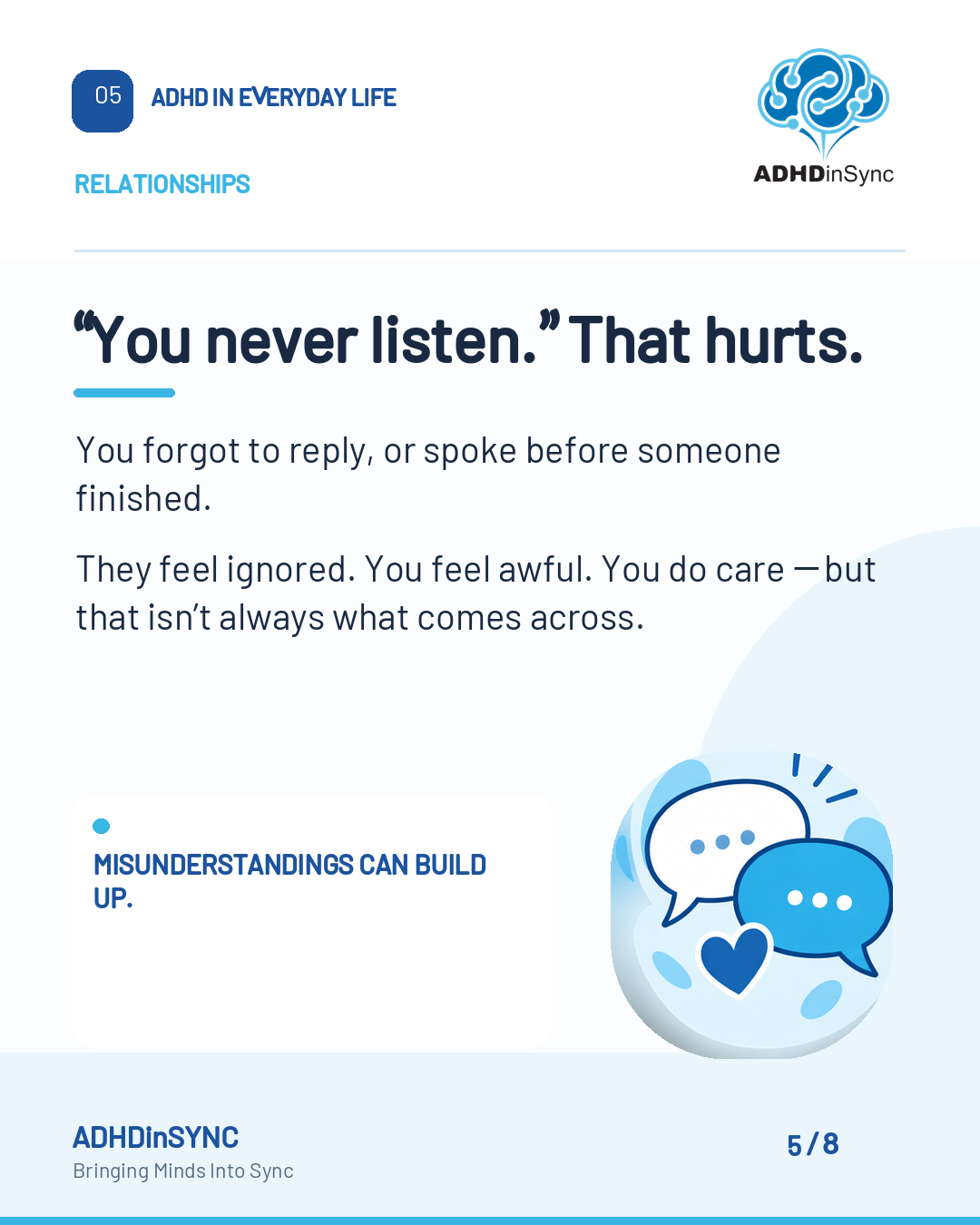
Relationships — “you never listen”
You forgot to reply, or spoke before someone finished. They feel ignored. You feel awful. You do care — but that isn’t always what comes across.
Why the pattern matters
Interrupting or forgetting a reply does not establish ADHD. Repeated misunderstandings may affect relationships and are worth exploring.
Moment 6 of 8
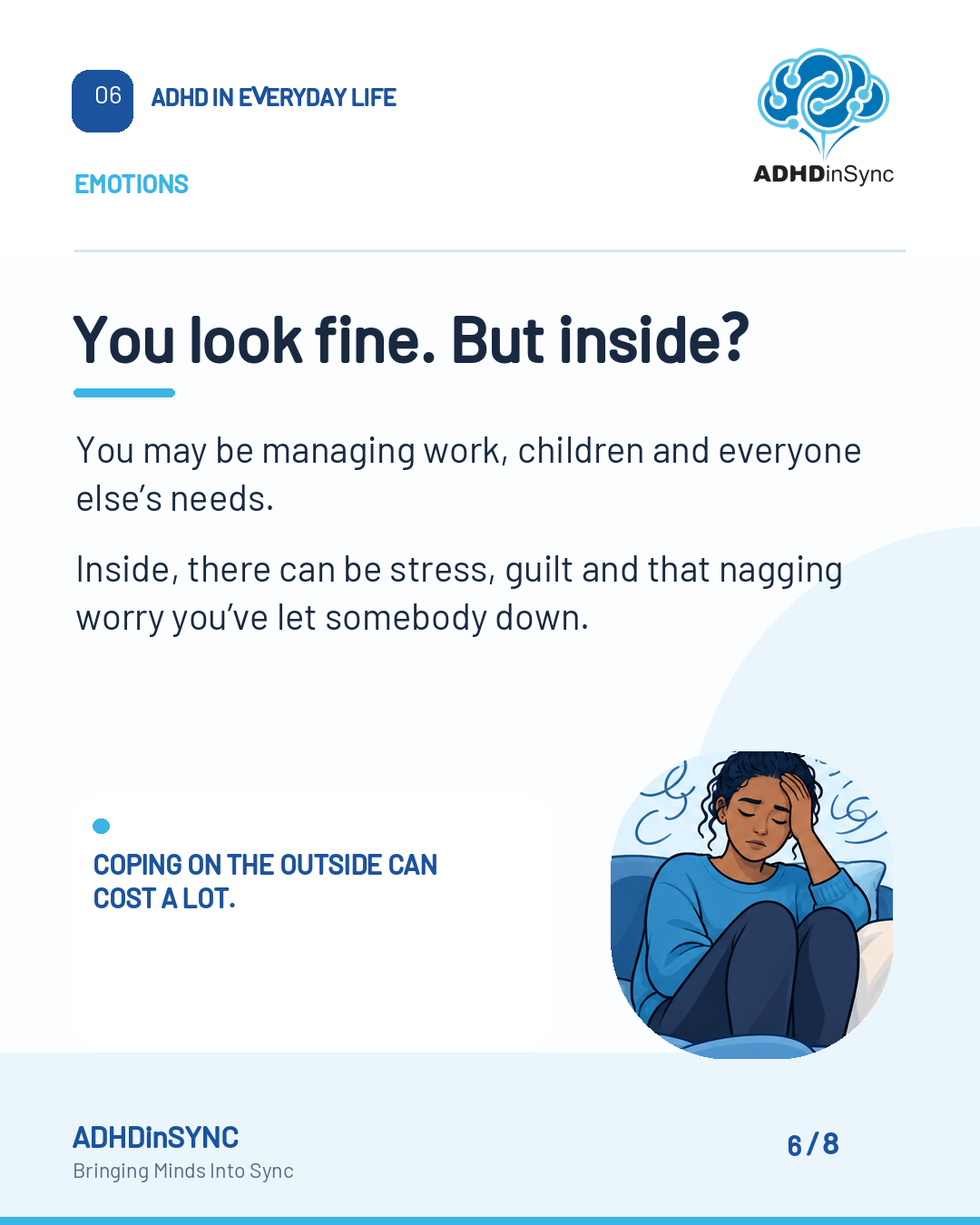
Emotions — you look fine, but inside?
You may be managing work, children and everyone else’s needs. Inside, there can be stress, guilt and that nagging worry you’ve let somebody down.
Why the pattern matters
Stress, guilt and feeling overwhelmed have many possible causes. They matter, but do not by themselves identify ADHD.
Moment 7 of 8
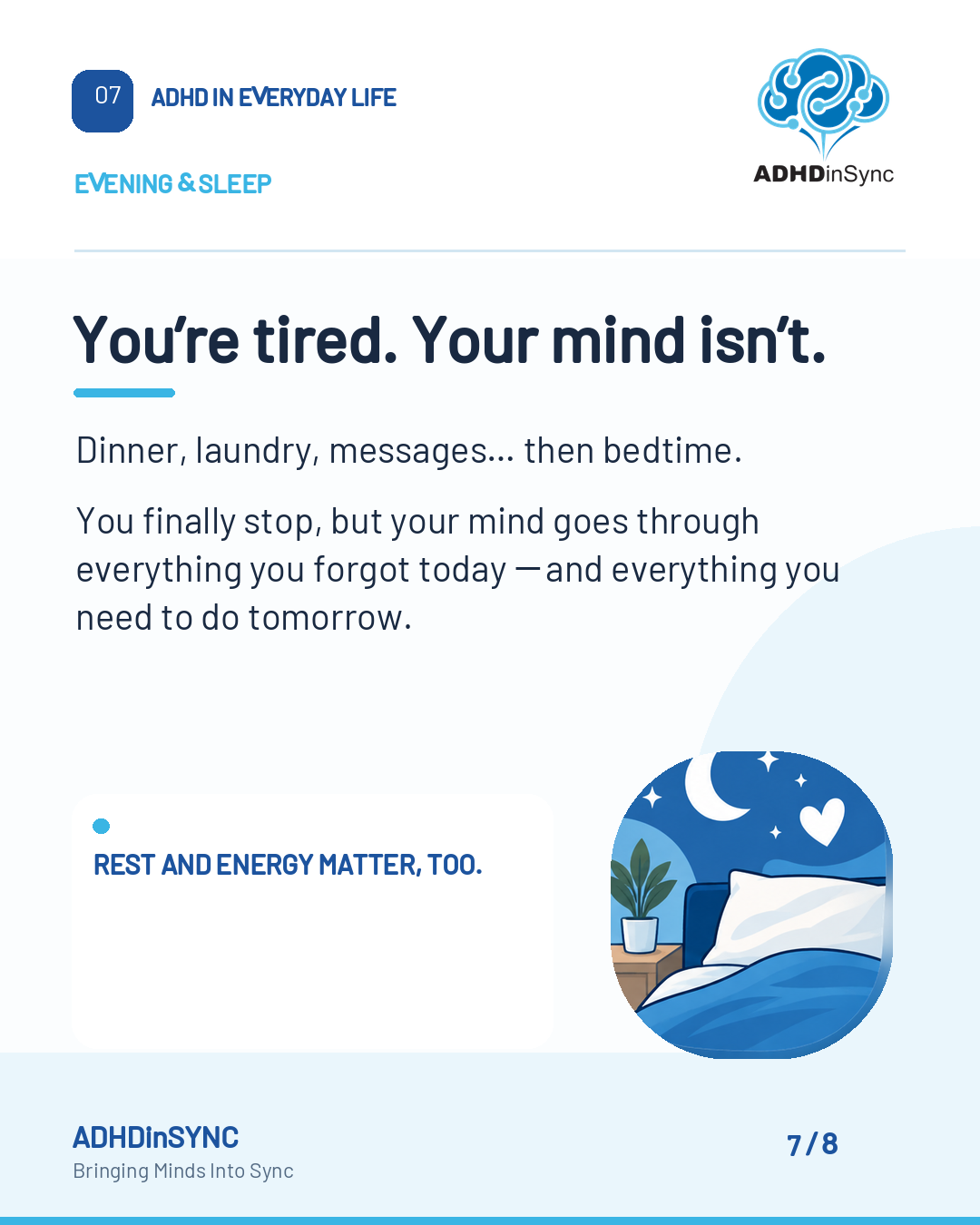
Evening and sleep — tired, but your mind isn’t
Dinner, laundry, messages… then bedtime. You finally stop, but your mind goes through everything you forgot today — and everything you need to do tomorrow.
Why the pattern matters
A busy mind at bedtime is not specific to ADHD. Persistent sleep difficulties deserve attention, whatever the cause.
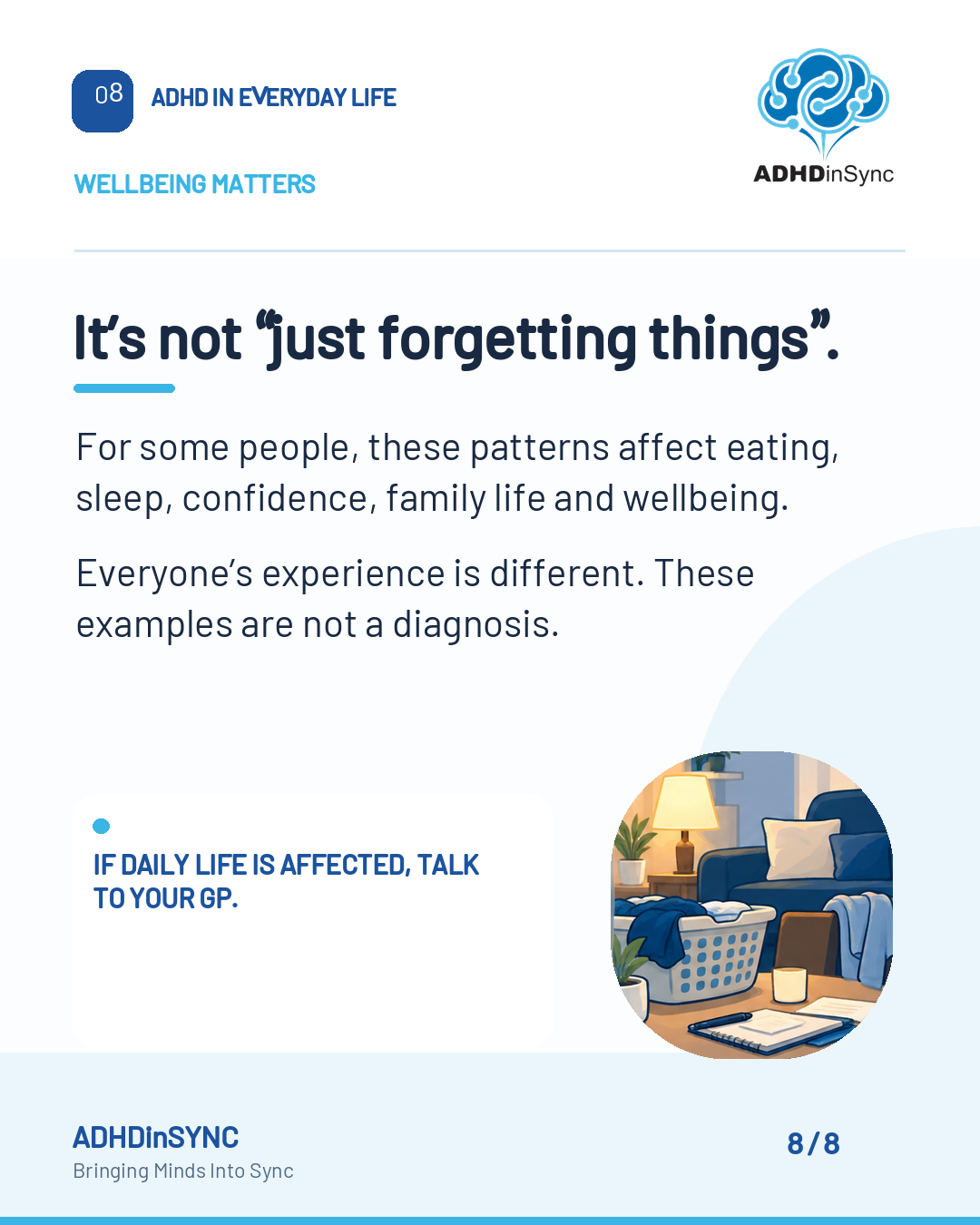
Moment 8 of 8
Wellbeing matters — not “just forgetting things”
For some people, these patterns affect eating, sleep, confidence, family life and wellbeing. Everyone’s experience is different. These examples are not a diagnosis.
Why the pattern matters
You can seek help before you know the cause. Explain how daily difficulties affect your work, studies, relationships or health.
Sources and further reading
- NHS: ADHD in adults
- NHS: ADHD in children and young people
- NICE NG87: diagnosis and management
- British Dietetic Association: ADHD and eating routines
Sources checked: 18 October 2026.